

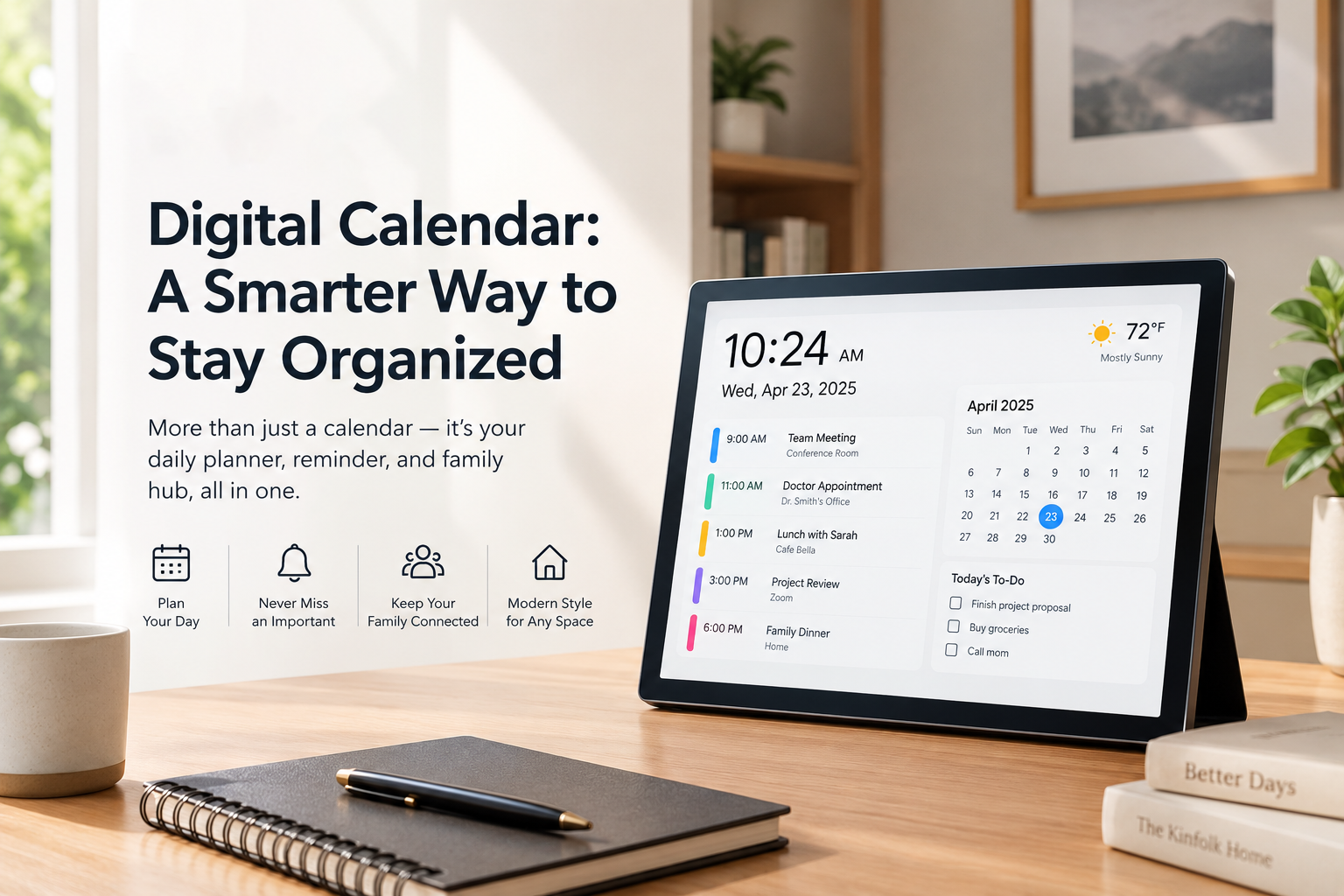
In today's fast-paced world, staying organized is more challenging than ever. Between work meetings, school activities, family events, appointments, and personal goals, it can feel like there simply aren't enough hours in the day. Traditional paper calendars and sticky notes may still have their place, but modern households and professionals are increasingly turning to digital calendars to streamline their schedules and improve productivity.
A digital calendar is much more than a simple scheduling tool. It serves as a centralized hub for planning, communication, reminders, task management, and family coordination. Whether you're a busy parent managing multiple schedules, a student balancing classes and assignments, or a professional juggling meetings and deadlines, a digital calendar can transform the way you organize your life.
In this guide, we'll explore the benefits of digital calendars, how they improve productivity, the key features to look for, and why they have become an essential part of modern living.
What Is a Digital Calendar?
A digital calendar is an electronic scheduling system that allows users to organize events, appointments, tasks, reminders, and daily activities in one convenient location. Unlike traditional paper planners, digital calendars can be updated instantly, synchronized across devices, and shared with family members or colleagues.
Modern digital calendar displays often feature:
- Daily, weekly, and monthly calendar views
- Shared family schedules
- Event reminders and notifications
- Weather updates
- To-do lists and task tracking
- Smart home integration
- Cloud synchronization
- Photo display capabilities
- Multiple user profiles
These features make digital calendars a practical solution for both personal and professional organization.
Why Traditional Calendars No Longer Meet Modern Needs
For decades, paper calendars were the standard way to keep track of schedules. While they remain useful for basic planning, they come with significant limitations.
Paper calendars cannot:
- Send reminders
- Sync across devices
- Update automatically
- Support multiple users easily
- Integrate with digital services
- Provide real-time schedule changes
Imagine a family with two working parents and three children. School events, sports practices, doctor appointments, work meetings, and social activities are constantly changing. A paper calendar quickly becomes cluttered and outdated.
Digital calendars eliminate these challenges by providing real-time updates and shared access for everyone involved.
The Benefits of Using a Digital Calendar
1. Better Time Management
One of the biggest advantages of digital calendars is improved time management.
Instead of relying on memory, users can schedule tasks and appointments with confidence. Reminders ensure that important commitments are never forgotten, while visual schedules help users plan their days more effectively.
By clearly seeing upcoming events, people can prioritize tasks, reduce conflicts, and make better use of their time.
2. Simplified Family Coordination
Modern families often have complex schedules.
Parents may need to coordinate:
- School activities
- Sports practices
- Medical appointments
- Family gatherings
- Work commitments
- Household responsibilities
A shared digital calendar allows everyone to stay informed. Family members can view updates in real time, reducing confusion and minimizing scheduling conflicts.
Instead of constantly sending text messages or making phone calls, everyone can simply check the shared calendar.
3. Increased Productivity
Productivity is closely tied to organization.
Digital calendars help users:
- Plan daily priorities
- Track deadlines
- Schedule focused work sessions
- Organize meetings
- Manage recurring tasks
By reducing mental clutter, users can focus more energy on meaningful work rather than remembering appointments and deadlines.
4. Reduced Stress
Many people experience stress because they worry about forgetting important tasks.
A digital calendar acts as a reliable assistant that keeps track of responsibilities and sends reminders when needed.
Knowing that appointments, deadlines, and commitments are organized in one place provides peace of mind and reduces anxiety.
5. Improved Communication
Shared calendars improve communication within families, teams, and organizations.
Everyone can see upcoming events and schedule changes instantly. This transparency helps prevent misunderstandings and ensures everyone stays aligned.
Digital Calendars for Families
Families are among the biggest beneficiaries of digital calendar technology.
A digital family calendar creates a centralized planning system where everyone can access important information.
Managing Children's Activities
Parents often manage multiple schedules simultaneously.
A digital calendar can track:
- School schedules
- Homework deadlines
- Sports practices
- Music lessons
- Birthday parties
- Extracurricular activities
Color-coded events make it easy to identify which activities belong to each family member.
Coordinating Household Responsibilities
Many digital calendars also support task lists.
Families can assign responsibilities such as:
- Grocery shopping
- Cleaning schedules
- Pet care
- Household maintenance
This encourages accountability and keeps everyone organized.
Staying Connected
Even when family members are away from home, digital calendars help maintain coordination and communication.
Shared access ensures everyone stays informed regardless of location.
Digital Calendars for Professionals
Professionals face constant scheduling demands.
Meetings, deadlines, presentations, client calls, and project milestones require careful organization.
A digital calendar helps professionals:
- Schedule appointments efficiently
- Avoid double bookings
- Set automatic reminders
- Organize projects
- Track important deadlines
Many professionals use digital calendar displays in their home offices to keep critical information visible throughout the day.
Digital Calendars for Students
Students often balance:
- Classes
- Assignments
- Exams
- Study sessions
- Extracurricular activities
Without proper organization, important deadlines can easily be missed.
Digital calendars help students:
- Plan study schedules
- Track assignment due dates
- Organize exam preparation
- Manage personal commitments
Developing strong organizational habits early can contribute significantly to academic success.
Features to Look for in a Digital Calendar
Not all digital calendars offer the same experience.
When selecting a digital calendar, consider the following features.
Large, Easy-to-Read Display
A clear display makes it easy to view schedules from across the room.
Large screens are particularly useful in kitchens, offices, and family common areas.
Calendar Synchronization
The ability to sync with popular calendar services ensures schedules remain updated automatically.
Synchronization helps prevent duplicate entries and scheduling conflicts.
Shared Access
Family and team collaboration become much easier when multiple users can access the same calendar.
Smart Reminders
Custom reminders help users stay on top of appointments, meetings, and important events.
Task Management
Integrated to-do lists help users organize responsibilities and track progress.
User-Friendly Interface
A simple and intuitive interface ensures that users of all ages can navigate the calendar easily.
Digital Calendars and Smart Homes
As smart home technology becomes more common, digital calendars are evolving beyond scheduling tools.
Many modern systems can integrate with:
- Smart displays
- Voice assistants
- Home automation systems
- Weather services
- Productivity apps
This creates a connected ecosystem that helps users manage their daily lives more efficiently.
Imagine starting your day with a display showing:
- Today's appointments
- Weather forecast
- Family schedules
- Task reminders
- Upcoming events
Having all this information available at a glance simplifies daily planning.
How Digital Calendars Improve Work-Life Balance
Work-life balance is a growing priority for many individuals.
Digital calendars help create boundaries between work and personal life by providing clear visibility into commitments and available time.
Users can:
- Schedule personal time intentionally
- Block focus periods
- Plan family activities
- Avoid overbooking
By maintaining a balanced schedule, individuals can improve productivity while protecting personal well-being.
Why Digital Calendars Are Becoming a Household Essential
Just as smartphones transformed communication, digital calendars are transforming organization.
Modern households increasingly rely on shared information, real-time updates, and seamless coordination.
Digital calendars provide:
- Better organization
- Greater productivity
- Improved communication
- Reduced stress
- Enhanced family coordination
As technology continues to evolve, digital calendars are becoming a practical and valuable addition to homes, offices, classrooms, and businesses.